



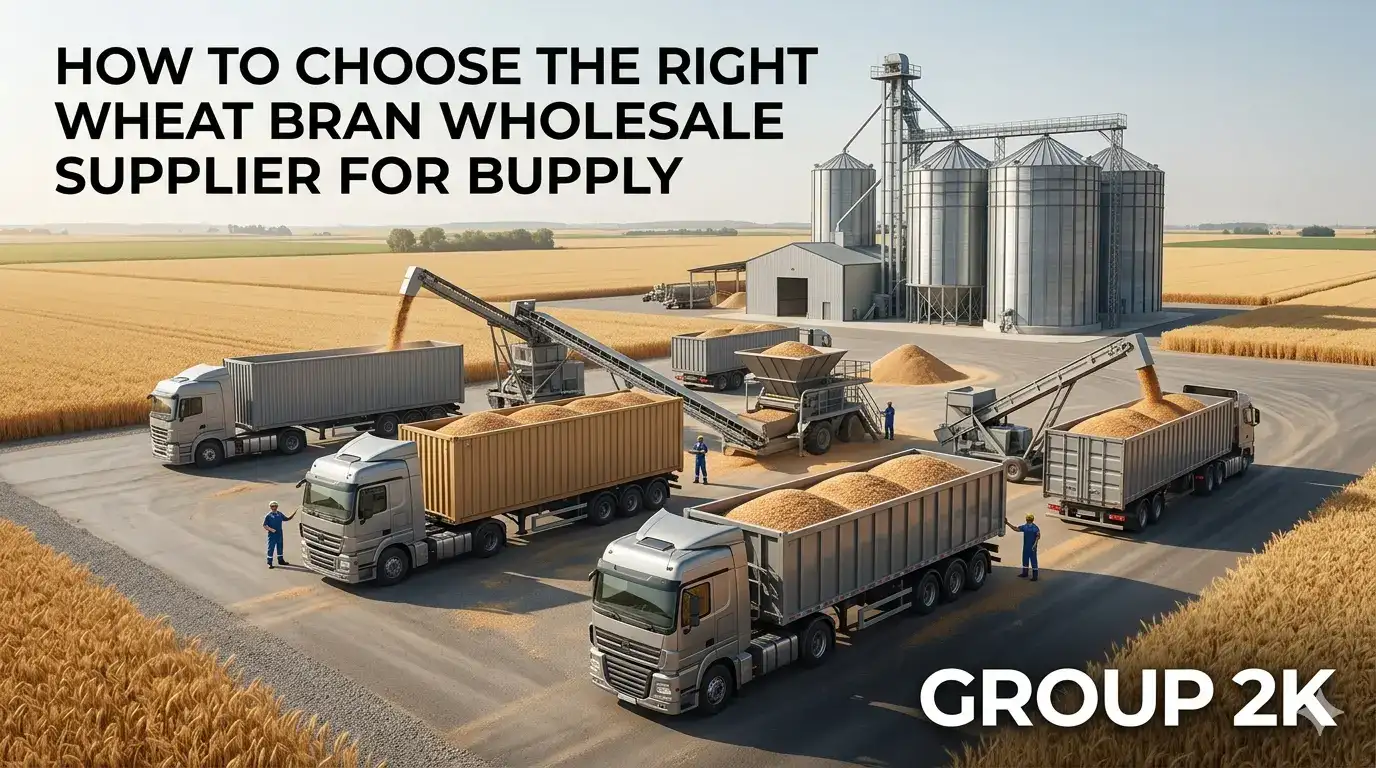
Wheat bran is a very important part of the animal feed and food industry. Many businesses need a large amount of wheat bran every month. When you buy in bulk, you cannot take risks with quality or delivery. Choosing the wrong partner can cause big losses for your business. You need a trusted wheat bran wholesale supplier who understands your specific needs and provides high-quality products consistently.
This guide will help you understand every step of choosing the best supplier for your bulk supply. We will talk about quality, pricing, logistics, and how to verify a supplier before you sign a contract. Our goal is to give you all the facts so you can make a smart decision for your company.
A good supplier is the backbone of your supply chain. If the supplier is not professional, your production will stop. You must look for specific qualities before you start working with anyone.
The most important quality is consistency. Wheat bran is a natural product, but its quality should not change too much between orders. A reliable supplier tests every batch. They make sure the fiber content and moisture are always the same. If the quality changes, it can affect the health of animals or the quality of food products. You should ask the supplier how they maintain this consistency.
A reliable supplier must have a big production unit. They should be able to give you the amount you need even during high demand. If a supplier depends on other small mills, they might fail to deliver your order on time. You need a partner who owns their production process. This stability helps you plan your business growth without worrying about running out of stock.
Good business runs on clear talk. A professional supplier answers your emails and calls quickly. They should tell you the truth about stock levels and delivery times. If there is a delay, they must inform you early. Transparent communication builds trust between a buyer and a seller. Avoid suppliers who give vague answers or take too long to reply to simple questions.
Experience matters a lot in the agriculture sector. A supplier who has been in the market for many years knows the challenges. They understand seasonal changes in wheat crops. They know how to store wheat bran safely in different weather conditions. An experienced supplier can also give you advice on the best type of bran for your specific use.
If you are buying from another country, the supplier must know about export rules. Exporting wheat bran requires special documents and treatments. A supplier with export experience knows how to handle sea freight and customs. They will make sure the product reaches your port without legal problems.
Before you pay any money, you must check the technical details of the product. Wheat bran has different grades. You must choose the one that fits your needs.
Moisture is a very big factor in wheat bran. If the moisture is too high, the bran will catch mold and spoil quickly. Usually, the moisture should be between 10% and 12%. Ask the supplier for a lab report that shows the moisture level. Low moisture means you are paying for the actual product and not for water weight. It also ensures the product stays fresh during long shipping journeys.
Wheat bran is famous for its high fiber. If you are using it for animal feed, the fiber percentage is very important for digestion. Different animals need different levels of fiber. You must confirm the crude fiber percentage with your supplier. A professional supplier will provide a nutritional analysis sheet. This helps you maintain the quality of your own final products.
The wheat bran must be clean. It should not contain dust, sand, or pieces of wood. Sometimes, low-quality suppliers mix other materials to increase the weight. This is very bad for your machines and for animal health. Ask the supplier about their cleaning process. They should use magnetic separators and sifters to remove all impurities before packing.
Wheat bran comes in different physical forms. Coarse bran has large flakes and is good for certain types of livestock. Fine bran is better for mixing into poultry feed or human food products. Some suppliers also offer pellets which are easy to handle and transport. You must tell the supplier exactly which texture you need. If you are not sure, ask for samples of all three types.
Wheat bran does not last forever. You need to know how long it will stay fresh in your warehouse. Usually, wheat bran has a shelf life of 3 to 6 months if stored correctly. The supplier should tell you the best way to store it. It needs a cool, dry place away from sunlight. Knowing the shelf life helps you decide how much to order at one time.
When you run a large factory, you cannot wait for raw materials. Your supplier must be strong enough to keep your machines running.
Ask the supplier how many metric tons they produce every month. If your requirement is 500 tons and they only produce 600 tons, it might be risky. You want a supplier whose total capacity is much higher than your order. This means they can easily handle your needs even if their other clients increase their orders.
Sometimes your business might get a big project suddenly. You will need more wheat bran than usual. A good supplier should have the flexibility to increase supply. They should keep some extra stock in their warehouse for such situations. Discuss this "buffer stock" capability with them before finalizing the contract.
What happens if the supplier's main mill has a technical problem? A professional supplier always has a backup plan. They might have multiple production lines or a network of partner mills that follow the same quality standards. This ensures that your supply never stops, no matter what happens at the factory level.
Wheat is a seasonal crop. In some months, wheat might be short in the market. This can affect wheat bran production. A stable supplier buys large amounts of wheat during harvest season and stores it in silos. This allows them to produce wheat bran all year round at a steady pace. Make sure your supplier has large storage facilities for raw wheat.
Price is a major part of your profit margin. However, the lowest price is not always the best. You need to understand the full cost of the product.
Always clarify the unit of measurement. Is the price for a short ton, a long ton, or a metric ton? This small detail can change the total cost by thousands of dollars. Ask for a clear price list that shows the cost per metric ton. This makes it easy for you to compare different suppliers fairly.
Sometimes the quoted price is only for the product at the factory gate. You must ask about other costs. These include packing charges, loading fees, and local transport to the port. If you are importing, there will be insurance and freight costs. A transparent supplier will give you an "All-in" price or a clear breakdown of every extra cent you have to pay.
Different suppliers have different rules for money. Some want 100% advance payment. Others accept a Letter of Credit (LC) or offer credit terms to old customers. For the first few orders, using an LC is a safe way to protect your money. It ensures the supplier only gets paid after they ship the goods and show the documents.
If you buy regularly, you should talk about a long-term contract. This can protect you from price jumps in the market. The supplier might give you a fixed price for six months or a year. This helps you manage your budget easily. In return, the supplier gets a guaranteed buyer for their production.
The Minimum Order Quantity is the smallest amount a supplier is willing to sell. You need to find a supplier whose MOQ matches your storage and budget.
In the bulk wheat bran market, the MOQ is usually one full container load (FCL). This is around 18 to 26 metric tons depending on the packing. Some local suppliers might sell in smaller amounts like 5 or 10 tons. You must check if their MOQ fits your truck or container size to save on transport costs.
A good supplier understands that trust takes time. They might allow a smaller trial order for the first time. Even if their standard MOQ is high, they might agree to send half a container so you can test the quality. If a supplier is very rigid and refuses to help a new buyer, they might be difficult to work with in the future.
As your business grows, your orders will get bigger. Your supplier must be able to scale up with you. Talk to them about your future plans. A supplier who is happy to see you grow will give you better support and priority during busy times.
Packaging protects the wheat bran from moisture, pests, and damage during transport. It also makes it easier for you to move the product in your warehouse.
Most wheat bran is packed in PP (polypropylene) bags. The standard sizes are 25kg and 50kg. 50kg bags are very common for bulk export because they fill the container efficiently. Smaller 25kg bags are easier for workers to lift by hand. Confirm the bag material quality with the supplier to avoid tearing during transit.
If you have a large factory with automated systems, you might prefer Jumbo bags (also called FIBC). These bags can hold 500kg to 1000kg of wheat bran. They are moved with forklifts and help in fast unloading. Some suppliers also offer "bulk in container" where the bran is loaded directly into a lined container without bags. This is the cheapest way but requires special equipment to unload.
Some buyers want their own brand name printed on the bags. If you are a distributor, you might need your logo and contact details on the packaging. Check if the supplier offers printing services. They might charge a small fee for the first time to make the printing plates, but it helps in building your brand in the local market.
Every country has different rules for labels. You might need to mention the weight, production date, expiry date, and nutritional facts in a specific language. A professional supplier will help you create a label that follows your local laws. This prevents your shipment from getting stuck at customs.
Buying the product is only half the job. Getting it to your warehouse safely and on time is the other half.
If the supplier is in your country, they should have their own trucks or a tie-up with a transport company. For international orders, they should understand Incoterms like FOB (Free on Board) or CIF (Cost, Insurance, and Freight). You must decide who will handle the sea freight. A supplier with strong logistics connections can often get better shipping rates than you.
In the feed industry, timing is everything. If the bran arrives late, the animals might go hungry or your production line will stop. Ask the supplier for their average lead time. How many days after payment will the goods leave the factory? A reliable partner gives you a realistic schedule and sticks to it.
Wheat bran is a light product, so it occupies a lot of space. It must be loaded carefully to avoid shifting during the journey. The supplier should ensure the container is dry and clean before loading. If they are sending bags, they should use "desiccant bags" inside the container to absorb any moisture during the sea voyage.
Exporting agricultural products requires many papers. You will need a Bill of Lading, Commercial Invoice, Packing List, and a Certificate of Origin. You might also need a Phytosanitary Certificate to prove the product is free from pests. A professional supplier has a dedicated team to handle these documents. If the papers are wrong, you will have to pay heavy fines at the port.
Certifications prove that the supplier follows international safety and quality rules. It gives you peace of mind that the product is safe.
ISO certification shows that the company has a good management system. HACCP is even more important for food and feed. It stands for Hazard Analysis and Critical Control Points. It means the supplier has a system to prevent biological, chemical, or physical risks in the product. Always ask for copies of these certificates and check if they are still valid.
A good factory has its own lab. They should test the wheat bran at every stage. They test the raw wheat when it enters the mill and the bran when it is packed. Ask the supplier about their "Quality Control" (QC) steps. Do they have a dedicated QC team? Do they keep samples of every batch for future reference? This shows they take quality seriously.
The supplier must be a legally registered exporter in their country. They should have a valid export license. You can ask for their tax registration and business license. Working with a legal and compliant company protects you from international trade scams.
Modern buyers care about how the product is made. A supplier who follows safety standards for their workers is usually more organized and reliable. They are less likely to face strikes or legal shutdowns, which means your supply will be more stable.
Every buyer has unique needs. A flexible supplier who can customize the product is a great asset for your business.
Some customers need more fiber, while others need a specific protein level. You might need the bran to be extra dry for a special production process. A professional supplier can adjust their milling process to meet your specific requirements. This is usually possible for large bulk orders.
If you want to sell the wheat bran under your own name, you need private labeling. The supplier acts as your manufacturer. They pack the product in your bags and you sell it as your own. This is a great way to build a business without owning a mill. Make sure the supplier signs a non-disclosure agreement (NDA) so they don't approach your customers directly.
Some large companies provide "toll milling" or contract manufacturing. You give them the wheat, and they process it into bran for you. Or you give them a specific formula, and they make it. This shows the supplier has high technical skills and a very professional setup.
If you need a mix of wheat bran and other grain by-products, ask if the supplier can do the mixing at the factory. This saves you time and labor costs at your own facility. A supplier with a modern mixing plant can provide a "ready-to-use" product for your feed mill.
You must be like a detective before you send a large payment. Verification is the best way to avoid scammers and low-quality sellers.
Never buy a large amount without seeing a sample first. Ask the supplier to send a 1kg or 2kg sample by courier. When you get the sample, check the color, smell, and texture. If the sample is good, keep it safely. When the big order arrives, compare the goods with the sample you kept. This is your proof of quality.
Ask for a recent lab analysis report from an independent third-party lab. The report should show the protein, fiber, ash, and moisture levels. A genuine supplier will always have these reports ready. If they hesitate to show a lab report, it is a big warning sign.
If your order is very large, it is worth visiting the factory. If you cannot go yourself, you can hire a local agent to visit the mill. They can check if the factory actually exists and if it is clean. A real supplier will be happy to show you their facility. They will show you their machines, their storage, and their team.
Search for the supplier’s name online. Look for reviews on B2B platforms. Ask the supplier for references from other international clients. A good supplier will have a history of successful trades. If you find many complaints about late delivery or bad quality, stay away from that company.
For peace of mind, you can use a third-party inspection service like SGS or Intertek. These companies send an inspector to the factory during loading. They check the weight, the quality, and the number of bags. They also seal the container in front of their eyes. This is the safest way to ensure you get exactly what you paid for.
International trade has some risks. If you know them, you can prepare yourself.
The most common risk is that the first order is good, but the second one is bad. Some suppliers send a great sample but low-quality goods. Using a third-party inspection for every order is the best way to stop this. You should also have a clear quality clause in your contract.
Sometimes the supplier says the goods are ready, but they don't ship for weeks. This can be due to poor planning or lack of containers. Always ask for the name of the shipping line and the booking number. You can track the booking yourself to see if the goods are actually moving.
A supplier might write "High Fiber" on the bag but the lab test might show something else. Always rely on numbers and percentages, not on vague words like "premium" or "high quality." Every detail must be written clearly in the sales contract.
The wheat market can be volatile. Some unprofessional suppliers might ask for more money after you have already made a deposit, saying the wheat prices went up. A professional supplier respects the agreed price in the contract. Ensure your agreement has a "fixed price" clause for the duration of the order.
Watch out for these signs. If you see them, it is better to look for another supplier.
If a company has no website, no ISO certificates, and no trade history, be very careful. Scammers often create fake companies to take advance payments. A real wholesale business always has a digital and physical footprint.
If a supplier takes three days to reply to a simple question about price, imagine how they will behave when there is a real problem. Poor communication is a sign of an unorganized business. You need a partner who is active and responsive.
If the market price for wheat bran is $200 and someone offers it for $120, something is wrong. They might be selling spoiled goods, or they might not send anything at all. In bulk trade, prices are usually very similar between different professional suppliers. Avoid "too good to be true" deals.
If a supplier says they cannot send a sample, don't buy from them. Every genuine mill has samples ready for potential buyers. Refusing to send a sample usually means they are hiding the true quality of their product.
A professional contract should be many pages long. It should cover everything from quality to payment and disputes. If a supplier sends a one-page invoice and says "this is the contract," it is not enough. You need legal protection for your bulk investment.
When you find the right partner, your business becomes much easier to manage.
With a professional supplier, you don't have to look for new sources every month. You know the goods will arrive, and you know they will be good. This allows you to focus on your sales and marketing instead of worrying about raw materials.
As you build a relationship with a supplier, you get better deals. They might give you a discount on large volumes. They might offer better payment terms, like 30 days credit. A long-term partner values your business and will help you stay competitive in your market.
When your raw material is consistent, your final product is also consistent. This builds your own brand reputation. Your customers will trust you because your feed or food product always performs the same way. This consistency is the key to long-term business success.
A professional supplier handles all the headaches of shipping and documents. You just wait for the container to arrive at your warehouse. This peace of mind is very valuable for a business owner. You can sleep better knowing your supply chain is in safe hands.
The final step is the contract. Don't rush this part.
Write down every detail. Include moisture percentage, fiber percentage, ash content, and texture. Don't just say "wheat bran." Say "Coarse Wheat Bran with max 12% moisture." This document will be your main weapon if the quality is not right.
If you are planning to buy for a long time, try to lock the price. Even if you cannot lock it for a year, try to get a fixed price for at least 3 months. This helps you keep your own prices stable for your customers.
The contract should say exactly when the goods will be shipped. For example, "Shipment within 14 days of receiving the LC." You can also add a small penalty for every week of delay. This keeps the supplier motivated to ship on time.
What happens if the goods arrive and they are moldy? You must decide this before you pay. The contract should say that an independent inspector's report will be final. It should also say if the supplier will give a refund or a replacement for the bad goods.
No matter how big the supplier is, always start small. Order one container first. See how they handle the documentation, the packing, and the delivery. If the first order is perfect, then you can move to a larger 5 or 10-container contract.
Choosing the right partner for your wheat bran needs is a journey that requires patience and attention to detail. You must look beyond just the price and focus on the technical specifications like moisture and fiber. A reliable supplier is one who offers consistent quality, has a massive production capacity, and communicates with total transparency. Always remember to check for certifications like ISO or HACCP and verify the supplier through samples and factory audits.
By following these steps, you protect your business from risks like inconsistent quality and delivery delays. A strong partnership with a professional supplier will provide you with long-term stability, better negotiation power, and the peace of mind needed to grow your company. Take your time to build this relationship, start with a trial order, and ensure every detail is documented in a clear contract.
If you are looking for a partner who understands all these professional standards, Group 2K is here to help you. We focus on providing high-quality agricultural products to businesses around the world with total honesty. Our team ensures that every batch of wheat bran meets your specific needs and reaches your warehouse on time without any hassle.
Working with Group 2K means you get a dedicated partner who values your business growth. We offer flexible packaging, clear pricing, and all the necessary export documents to make your buying process smooth. Contact us today to discuss your bulk requirements and let us show you how we can support your production with our reliable supply chain solutions.
Every household on earth eventually replaces a refrigerator, a washing machine, or a hair styling
READ FULLConstruction and logistics both depend on wood products every single day, whether it is a structu
READ FULLHeating demand never truly disappears, and renewable fuel demand keeps climbing every year. Trade
READ FULL