



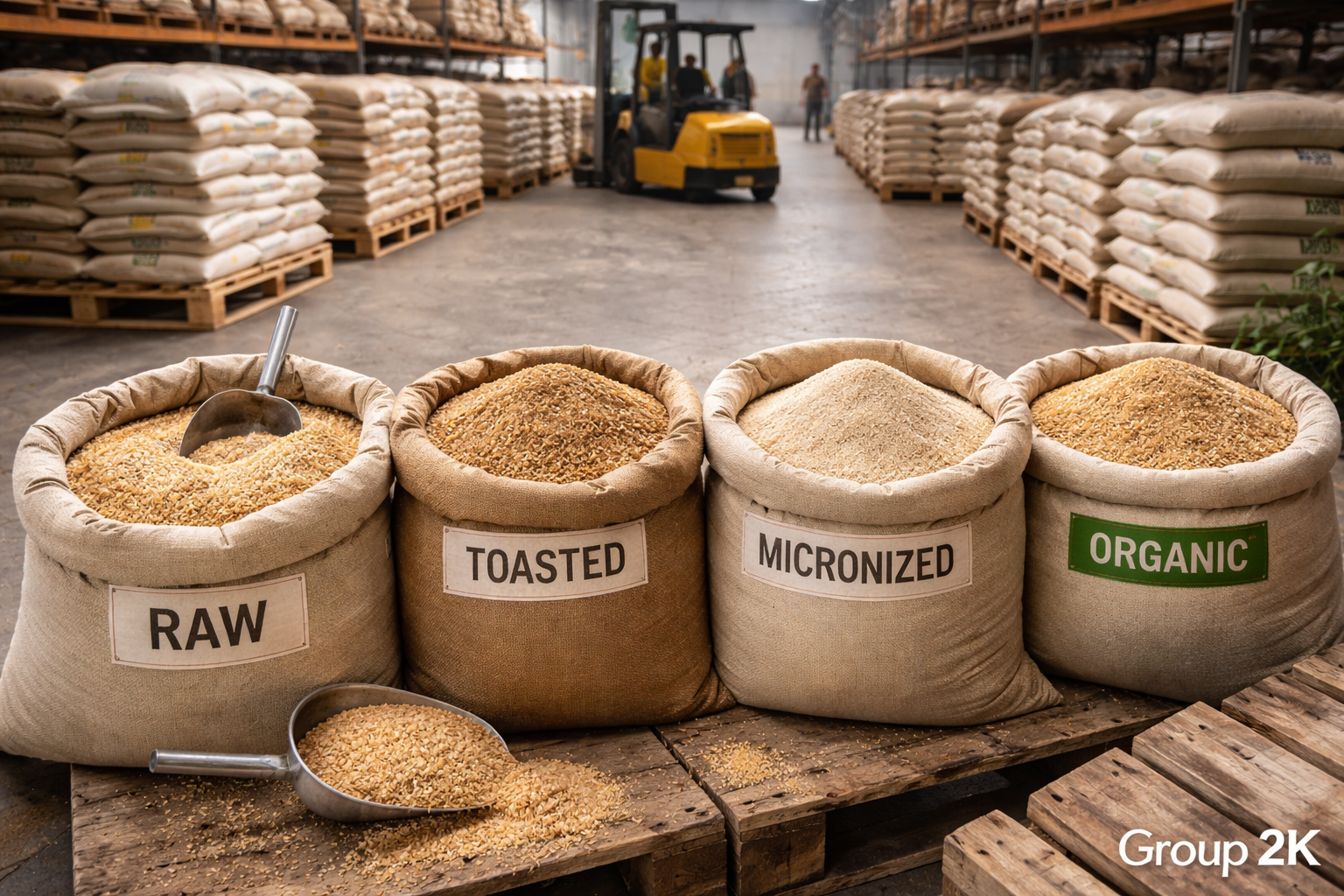
Wheat bran is a byproduct of milling wheat and is primarily known for its high dietary fiber content. In the wholesale market, wheat bran comes in various forms to cater to different industries such as food processing, animal feed, and nutraceuticals. Understanding the types of wheat bran is crucial for wholesalers, manufacturers, and distributors to select the most suitable product for their specific needs. Before purchasing wheat bran in bulk from the wholesale market, it is essential to know about wholesale wheat bran and its types. Here is a detailed breakdown of the types of wheat bran available in the market:
Raw wheat bran is the most basic form, obtained directly after milling wheat. It retains all layers of the bran, including the outer husk, making it rich in fiber, minerals, and vitamins.
Key Features:
Applications:
Toasted wheat bran is heat-treated to enhance flavor, shelf life, and digestibility. The toasting process also reduces the moisture content and gives a nutty taste, making it suitable for human consumption.
Key Features:
Applications:
Micronized wheat bran is finely ground to a smaller particle size, making it more versatile for incorporation into various products. This type is preferred where texture matters, like in smoothies or bakery items.
Key Features:
Applications:
Extruded wheat bran is processed using extrusion technology, which expands the bran and modifies its structure. This enhances its functional properties, such as water absorption and texture.
Key Features:
Applications:
Stabilized wheat bran is treated to prevent rancidity caused by natural oils in the bran. Stabilization extends the shelf life and maintains quality over long storage periods.
Key Features:
Applications:
Defatted wheat bran is processed to remove most of the natural oil content. This type is particularly useful in applications where low-fat content is essential.
Key Features:
Applications:
Organic wheat bran is sourced from certified organic wheat without the use of chemical fertilizers or pesticides. This type is highly preferred in health-conscious markets.
Key Features:
Applications:
Some wheat bran is subjected to steam processing to enhance safety, reduce microbial load, and improve digestibility for both human and animal consumption.
Key Features:
Applications:
The wholesale market offers a wide variety of wheat bran types, each designed to serve specific industries and applications. From raw and toasted to micronized, extruded, stabilized, defatted, organic, and steam-processed wheat bran, each type has unique characteristics, shelf life, and usability. For wholesalers and manufacturers, understanding these differences is essential to meet market demands efficiently, maintain product quality, and maximize profitability.
Every household on earth eventually replaces a refrigerator, a washing machine, or a hair styling
READ FULLConstruction and logistics both depend on wood products every single day, whether it is a structu
READ FULLHeating demand never truly disappears, and renewable fuel demand keeps climbing every year. Trade
READ FULL